Rooting Around
There is a strange pressure to make a garden look good. We talk about curb appeal, garden tours, landscape design, entertaining spaces and creating an outdoor room. We choose plants for color combinations, arrange furniture, hide the stray ugly hose and occasionally spend an unreasonable amount of money on something that is essentially a chair for sitting outside. All of this is perfectly reasonable, of course. But it does raise an interesting question: What does your garden look like when nobody is looking?
I don't mean when the neighbors are walking by or when you're having people over. I mean when the garden is entirely yours—when there is no one to impress, no photograph to take and no landscape designer standing nearby silently judging your color choice of mulch. What does the garden look like then? I suspect that is when it becomes most interesting.
The best gardens aren't necessarily the most polished. They are the ones that reveal something about the person who made them. Some are orderly and architectural because their owners like things that way. Others are glamorously chaotic, with plants wandering into one another and a bench that has clearly been sitting in the same spot for a generation or two. Neither is necessarily better. A garden is, after all, a very slow form of self-expression.
Some people collect plants the way other people collect art. A particular rose may remind them of their grandmother. A sprawling Japanese maple was once a sapling plucked from a neighbor’s yard. A peony may have come from a friend's garden decades ago and survived several moves. An old iris might have been divided from a plant that was growing in the garden of a house that no longer exists.
Those plants aren't simply plants anymore. They are souvenirs, photographs and family stories that happen to grow.
The same thing happens with the design of a garden. A bench might be in a completely impractical location because that's where the afternoon light is best, or perhaps, too heavy to move further. A stone may have been brought home from a vacation and small hands placed it beside the path. An old iron chair may be uncomfortable, rusted and objectively in need of replacement, but it has been there for thirty years and therefore has tenure. A garden can accumulate memories in much the same way a house does, except that the memories grow larger.
Children and grandchildren can become part of that landscape, too. A small garden planted by a child may have flowers too close together, crooked plant labels and considerably more water than anything actually requires. But give a child a little piece of earth and the opportunity to decide what goes into it, and something interesting happens. The garden becomes theirs.
Years later, the plants may be gone, but the memory of that little garden remains. And perhaps that is one of the nicest things we can give children: not another organized activity, but a small piece of the world that they are allowed to make their own. Skeptical? Make a teepee for them out of branches, let Hyacinth bean vines cover it, and then we’ll talk.
The most personal gardens also tend to have room for things that weren't invited. Bees, butterflies, moths, hummingbirds, birds, chipmunks and all manner of creatures appear with little regard for our carefully considered planting schemes. We have traditionally thought of these creatures as visitors to our gardens, but perhaps it makes more sense to think of ourselves as their hosts.
A garden designed entirely around human preferences can certainly be beautiful, but a garden that makes room for pollinators and wildlife becomes something larger than decoration. A patch of native flowers may not fit perfectly into the color scheme, but it can provide food for Monarchs. Seed heads that look untidy in November may be exactly what birds are looking for on a cold winter day. Stray leaves provide winter shelter for insects. What looks like neglect from the patio may look like excellent real estate to a grateful tenant.
Nature has rather different ideas about what constitutes a successful garden. We want symmetry; bees want flowers. We want a spotless lawn; birds want insects. We want to cut everything back in October; some fellow traveler may be depending on that supposedly dead plant to get through winter. The more you garden, the more you realize that perfection is largely a human invention.
This is also why I have become suspicious of gardens that look too finished. A garden should have some evidence that things actually happen there. Something should be growing in the wrong place. A vine should occasionally get away from you. There should be a plant you keep meaning to transplant but never do. There should be a place where the birds have clearly been having a better time than you planned.
A personal garden doesn't necessarily look like a landscape photograph. It looks like a life.
It might tell you that someone loves roses or birds or art. It might reveal that they travel, that they collect people, that they don't mind a little disorder, or that they have spent thirty years trying to grow something that refuses to cooperate. It might contain a tree planted in memory of someone, herbs outside the kitchen, a child's stepping stone or a grandchild's first attempt at growing tomatoes.
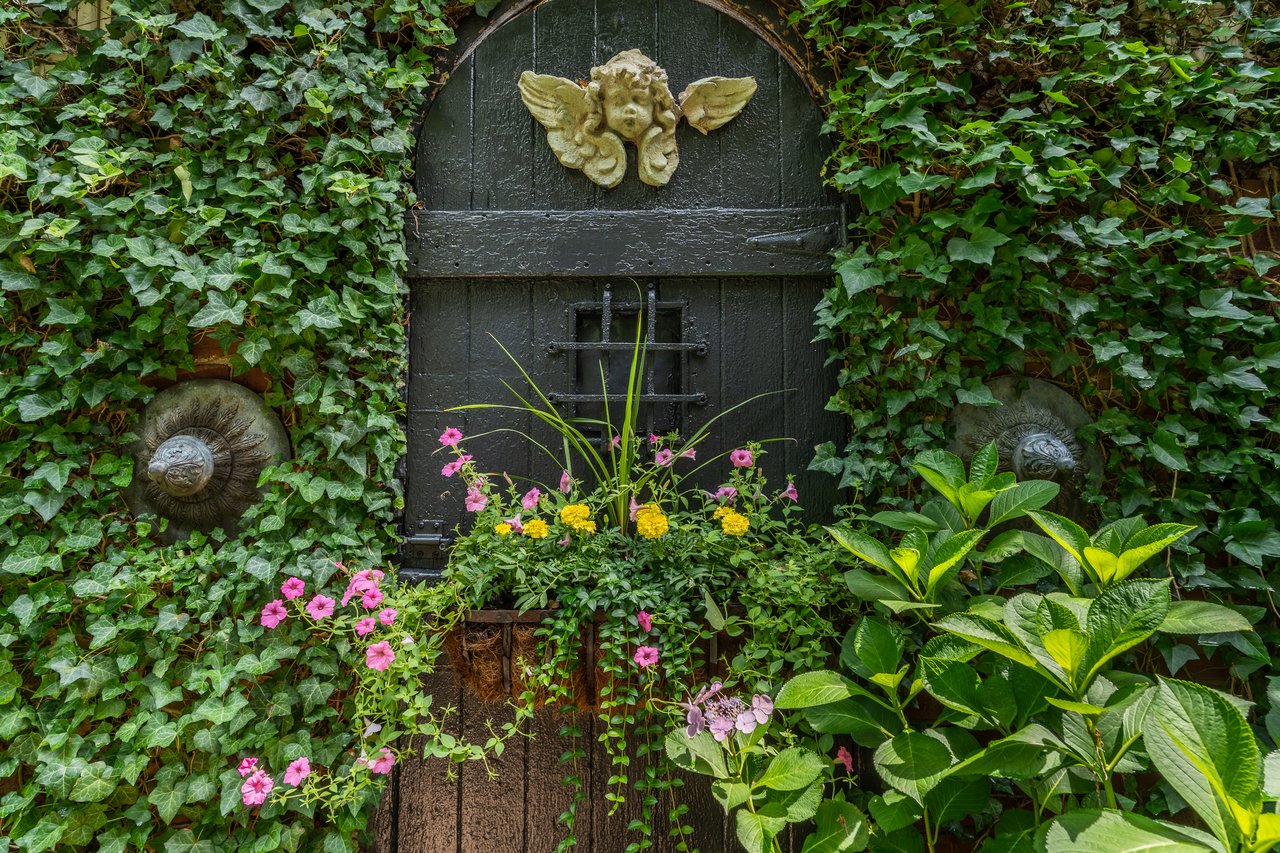
And then there are the truly private parts of a garden—the places that aren't really designed for anyone else. The chair tucked behind the hydrangeas. The hidden bench beneath the tree. The little dull patch that sings when the afternoon light is perfect. These aren't necessarily entertaining spaces. They are places for sitting alone with a cup of coffee, watching a bird work its way through a shrub or noticing that the angle of the light has changed.
Those spaces may be the real luxury of a garden. The English call these a folly. It started out an insult, from old French folie meaning foolishness or madness, when wealthy Victorians would spend great sums of money on decorative buildings that served no purpose other than visual ornament. Over time it came to mean a garden feature that drew you to it.
A garden can be elaborate or almost embarrassingly simple. What makes it personal isn't its size or its price. It's the reason it exists.
So perhaps the question isn't whether your garden looks good when nobody is looking. Perhaps the better question is whether it looks like you.
Not perfect. Not entirely planned. A little sentimental, a little eccentric, occasionally overgrown and full of things that make sense only if you know the story. A garden that remembers people, welcomes wildlife and gives you somewhere to sit when you don't particularly feel like doing anything else.
And, ideally, one that feels like home.